
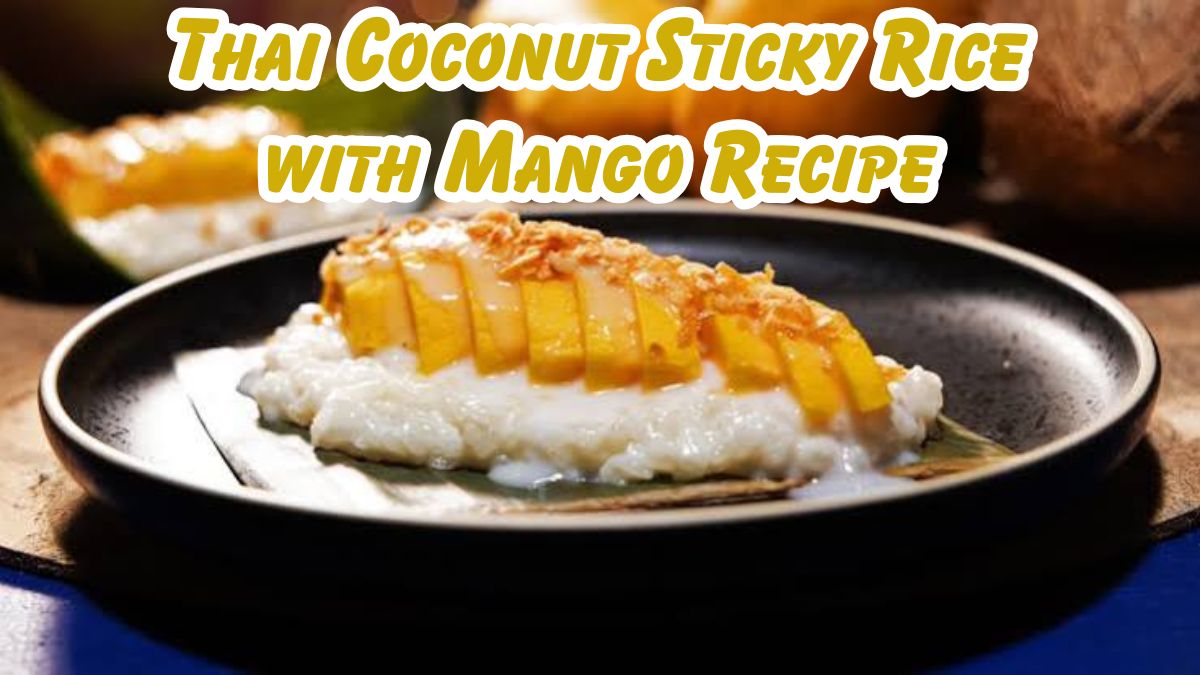
Thai Coconut Sticky Rice with Mango is a popular Thai dessert made with soft, sticky rice, sweet coconut milk, and fresh ripe mangoes. This delicious combination creates a creamy, sweet, and slightly chewy treat that is perfect for summer or after a special meal. With simple ingredients and an easy cooking method, you can make this traditional Thai dessert at home and enjoy its tropical flavor whenever you like.
Why You’ll Love This Thai Coconut Sticky Rice with Mango Recipe
- Made with simple ingredients that are easy to find.
- Combines creamy coconut milk with sweet, juicy mangoes.
- Offers a delicious balance of soft rice and fresh fruit.
- Perfect for summer parties and special occasions.
- Naturally dairy-free when prepared with coconut milk.
- Easy to prepare ahead and serve at home.
Ingredients for Thai Coconut Sticky Rice with Mango Recipe
- 1 cup Thai glutinous rice (sticky rice)
- 1 cup full-fat coconut milk
- ¼ cup granulated sugar
- ¼ teaspoon salt
- 2 ripe mangoes, peeled and sliced
- 1 tablespoon toasted sesame seeds or mung beans, optional
For the coconut sauce:
- ½ cup coconut milk
- 1 tablespoon sugar
- ⅛ teaspoon salt
- 1 teaspoon cornstarch mixed with 1 tablespoon water, optional, for thickening
How to Make Thai Coconut Sticky Rice with Mango Recipe
Soak the sticky rice, steam it until tender, and mix it with warm coconut milk, sugar, and salt. Let the rice absorb the sweet coconut mixture before serving it with freshly sliced mangoes. Prepare a simple coconut sauce to drizzle over the rice, then finish with toasted sesame seeds or mung beans for extra texture.
Instructions to Make Thai Coconut Sticky Rice with Mango Recipe
- Wash the rice: Rinse the sticky rice several times under cold water until the water becomes mostly clear.
- Soak the rice: Place the rice in a bowl, cover it with water, and soak for at least 4 hours or overnight. Drain thoroughly before cooking.
- Steam the rice: Place the drained rice in a steamer lined with cheesecloth or a suitable steaming liner. Steam for about 20–30 minutes, or until the grains are tender and chewy. Cooking time may vary depending on the rice.
- Prepare the coconut mixture: While the rice cooks, combine 1 cup coconut milk, ¼ cup sugar, and ¼ teaspoon salt in a saucepan.
- Warm the coconut milk: Heat the mixture over low heat, stirring until the sugar dissolves. Do not let it boil vigorously.
- Combine the rice and coconut milk: Transfer the hot cooked rice to a bowl. Pour the warm coconut mixture over it and stir gently until the rice is evenly coated.
- Let the rice absorb the sauce: Cover the bowl and let the rice rest for 20–30 minutes. This allows the sticky rice to absorb the coconut milk and develop its signature creamy texture.
- Prepare the coconut topping: In a small saucepan, combine ½ cup coconut milk, 1 tablespoon sugar, and ⅛ teaspoon salt. Warm gently until the sugar dissolves. If you prefer a thicker sauce, add the cornstarch mixture and stir until slightly thickened.
- Prepare the mangoes: Peel the ripe mangoes, remove the stones, and cut the flesh into thin slices.
- Arrange the dessert: Place a portion of coconut sticky rice on each serving plate and arrange the mango slices beside it.
- Add the coconut sauce: Drizzle the prepared coconut sauce over the sticky rice.
- Garnish and serve: Sprinkle toasted sesame seeds or crispy mung beans over the top, if desired. Serve warm or at room temperature with fresh mango.
Tips for the Best Thai Coconut Sticky Rice with Mango Recipe
- Use Thai glutinous rice rather than regular long-grain rice for the proper sticky texture.
- Soak the rice for several hours to help it cook evenly.
- Steam the rice instead of boiling it to avoid a watery texture.
- Choose ripe, sweet mangoes that are fragrant and juicy.
- Use full-fat coconut milk for a richer flavor and creamier consistency.
- Add the warm coconut mixture to the hot rice so it absorbs the liquid more easily.
- Allow enough resting time for the rice to soak up the coconut milk.
- Adjust the sugar according to the sweetness of your mangoes.
- Prepare the coconut topping separately to control its thickness.
- Serve the dessert fresh for the best flavor and texture.
Storage Instructions for Thai Coconut Sticky Rice with Mango Recipe
Store leftover coconut sticky rice in an airtight container in the refrigerator for up to 2 days. Keep the coconut sauce in a separate covered container and refrigerate the sliced mangoes separately.
To reheat the rice, add a small splash of coconut milk and warm it gently in the microwave or in a saucepan over low heat. Avoid overheating, as the rice can become dry or overly soft. For the best results, slice the mangoes shortly before serving and enjoy the dessert fresh.
FAQs About Thai Coconut Sticky Rice with Mango Recipe
What type of rice is used for Thai Coconut Sticky Rice with Mango?
Thai glutinous rice, also called sticky rice or sweet rice, is traditionally used. Regular white rice does not provide the same chewy and sticky texture.
Can I make Thai Coconut Sticky Rice with Mango without a steamer?
Yes. You can use a metal steaming basket or another suitable steaming setup over a pot of boiling water. Keep the rice above the water rather than submerged in it.
Do I have to soak sticky rice overnight?
No. Soaking for at least 4 hours is usually sufficient, although overnight soaking can be convenient. Follow the instructions on your rice package if they differ.
Which mangoes are best for this recipe?
Choose ripe, sweet mangoes with smooth, juicy flesh. Thai mangoes are traditional, but other sweet varieties work well too.
Can I make this recipe vegan?
Yes. This dessert is naturally dairy-free when you use coconut milk and plant-based sugar. Check your ingredients if you want to ensure they meet your dietary requirements.